Perimenopause Anxiety Is Not Ordinary Anxiety: Here Is the Difference and Why It Changes Everything
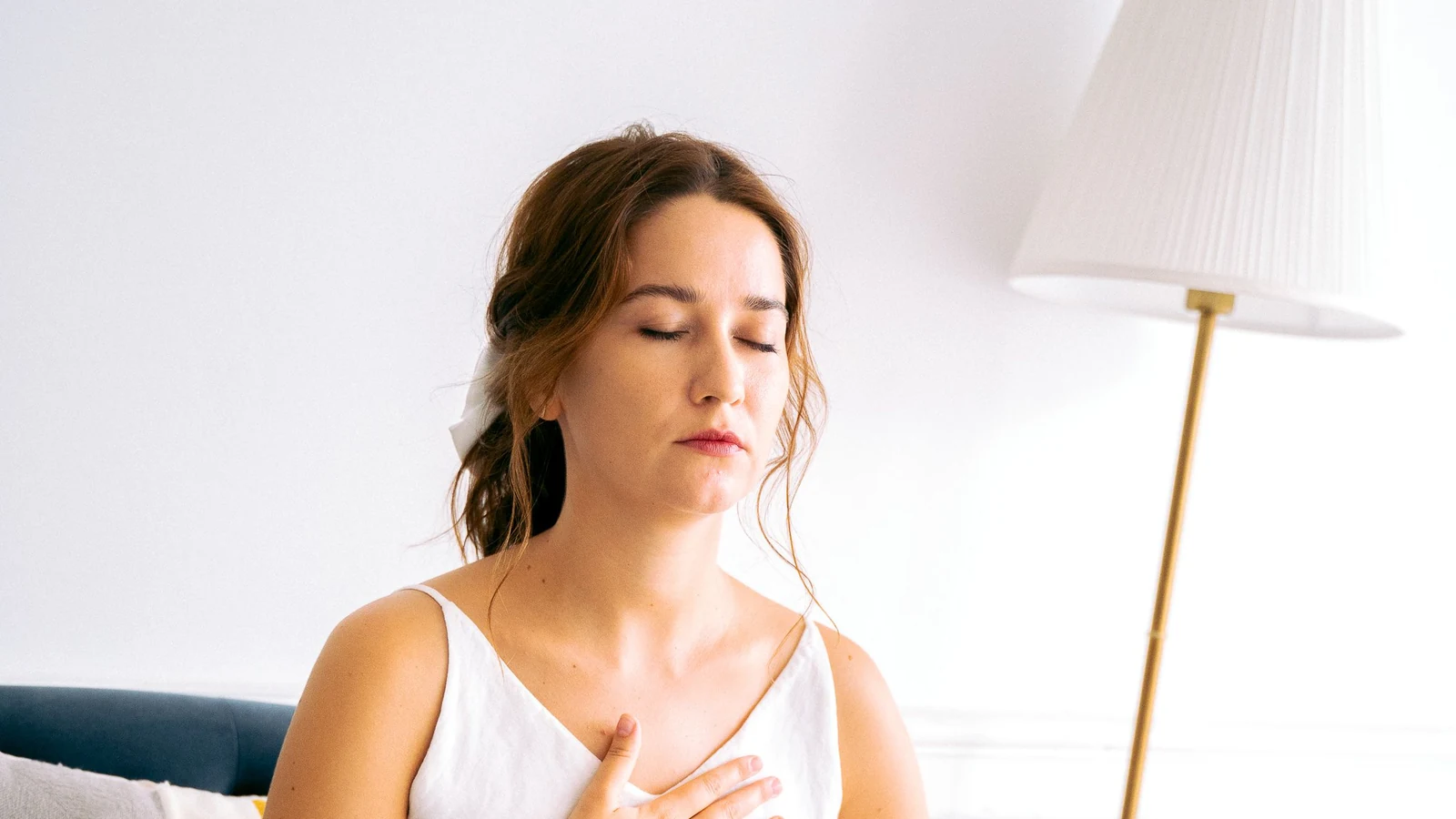
Perimenopause anxiety is anxiety that is driven or intensified by the hormonal shifts of perimenopause, particularly the fluctuating levels of oestrogen and progesterone that affect how your brain handles stress. It often feels different from the anxiety you may have known before, because it can arrive suddenly, physically and for no reason you can name.
You might be the woman who used to cope with everything. Presentations, school runs, a crisis at work and a birthday party on the same day. And now you wake with your heart pounding, feel dread in the supermarket queue or lie in bed convinced something terrible is about to happen, with absolutely nothing to point to. You keep asking yourself what on earth is wrong with you, and the scariest part is how little it makes sense.
This post explains why perimenopause anxiety happens, the link between progesterone and anxiety, why it can arrive from nowhere and how it differs from ordinary anxiety. You will also get the fastest breathing tool I know for bringing your body down when a wave hits.
Why does perimenopause cause anxiety?
Perimenopause can cause anxiety because the hormones that are fluctuating, oestrogen and progesterone, also act in the brain, where they help regulate mood, stress and sleep. During perimenopause these hormones do not fall neatly; they rise and drop unpredictably, sometimes from week to week. Your brain is trying to keep you steady on ground that keeps moving, so your alarm system goes off more easily. Hot flushes themselves can bring on palpitations or a surge of anxiety for some women.
There is also the rest of your life. Broken sleep, night sweats, a full mental load and caring for everyone around you all lower the amount of stress your body can absorb before it tips over. If sleep is part of your story, my post on why you can't sleep in midlife explains how 3am waking and anxiety feed each other.
"Many of the symptoms of menopause cannot possibly be directly produced by the ovaries, if you think about the hot flashes, the night sweats, the anxiety, the depression, the insomnia, the brain fog. Those are brain symptoms, and we should look at the brain as something that is impacted by menopause at least as much as your ovaries are."
Dr Lisa Mosconi, Director of the Women's Brain Initiative at Weill Cornell Medicine, speaking to The New York Times (2021)
What is the link between progesterone and anxiety?
Progesterone has a calming effect on the brain, largely through a substance your body makes from it called allopregnanolone. Allopregnanolone works on GABA receptors, the same calming system targeted by some anti-anxiety medicines, and it helps your nervous system settle. When progesterone becomes erratic in perimenopause, one of your body's natural brakes on anxiety becomes erratic too. Progesterone is often one of the first hormones to become irregular, which is why anxiety can be one of the earliest signs that something has changed.
Researchers are still working out the details. A review of allopregnanolone and reproductive mental health found it is linked with mood symptoms across the menstrual cycle, pregnancy and the menopause transition, and that the relationship seems to depend on how sensitive an individual woman is to hormonal change rather than simply on her hormone levels. That matters, because it helps explain why your friend may sail through while you feel like you are falling apart.
Why does perimenopause anxiety arrive for no reason?
Perimenopause anxiety can arrive for no obvious reason because the trigger is often happening inside your body rather than in your life. A shift in hormones, a hot flush building, a dip in blood sugar or a poor night's sleep can all set off a stress response before your thinking mind has noticed anything at all. Your body reacts first, and then your mind goes looking for something to blame. That is why you can feel dread and then find yourself worrying about your children, your work or your health to explain it.
Knowing this does not make the feeling disappear, but it can stop the second wave, the fear of the fear. Instead of searching for what is wrong, you can tell yourself that this is your body, that it is a wave and that it will pass. If you are not sure whether perimenopause is behind what you are feeling, my guide to the signs of perimenopause women often miss is a good next read.
How is perimenopause anxiety different from regular anxiety?
Perimenopause anxiety often looks different in its timing, its triggers and the way it lives in the body. It commonly appears in your late thirties or forties, sometimes in women who have never been anxious before, and it may follow your cycle, cluster around night sweats or hit hardest in the early hours. Many women describe it as body first, a racing heart, a hot rush or a sense of dread, with the anxious thoughts arriving afterwards. It frequently comes alongside other changes such as irregular periods, broken sleep, irritability and brain fog.
None of this means it is less real or less important. Anxiety of any kind deserves support, and the two can overlap; perimenopause can also make long-standing anxiety worse. If your anxiety is persistent, includes panic attacks or is affecting your work, relationships or daily life, speak to your GP or a menopause specialist about your options, which may include HRT, talking therapies or other treatments. If it is persistent, includes panic attacks or is affecting your work, relationships or daily life, speak to your GP or a menopause specialist.
| Feature | Anxiety you may have known before | Patterns common in perimenopause anxiety |
|---|---|---|
| When it started | Often earlier in life, linked to events or worries | New or worse in your late thirties or forties |
| What sets it off | Usually a clear worry, situation or thought | Often no obvious trigger, or a trigger far smaller than the reaction |
| Timing | Linked to stressful events | Can follow your cycle, night sweats or early hours waking |
| How it starts | Often thoughts first, then the body | Often body first: racing heart, heat, dread, then thoughts |
| What comes with it | Varies | Irregular periods, broken sleep, irritability, brain fog |
What is the fastest breathwork tool for acute anxiety?
The fastest breathing tool I know for an anxiety wave is the cyclic sigh, a double inhale through the nose followed by a long, slow exhale through the mouth. A 2023 Stanford study in Cell Reports Medicine found that five minutes a day of cyclic sighing improved mood and lowered resting breathing rate more than mindfulness meditation, and both reduced anxiety. A long exhale is one of the quickest signals you can send your body that it is safe enough to stand down. In a wave, even a few breaths can take the edge off.
That study looked at five minutes a day, so think of a few sighs as your emergency brake and the five-minute version as your daily practice. Breathing will not change your hormones, but it can change what is happening in your body while the wave is building. If anger tends to come with the anxiety, my post on why you are so angry in perimenopause has a three-minute breath for that too.
How To Do the Sigh and Settle
Use this the moment you feel a wave rising: the racing heart, the heat, the dread.
HOW TO DO IT:
- Put both feet flat on the floor and place one hand on your chest. If you can, let your shoulders drop.
- Breathe in through your nose until you feel full, then take a second, shorter sip of air through your nose on top.
- Breathe out slowly through your mouth, making the exhale longer than both inhales, like a long sigh. Repeat three to five times.
- Now look around and name three things you can see and feel your feet against the floor. Notice your heartbeat, your temperature and whether the wave has eased, even slightly.
Time required: 1 to 2 minutes
When to use it: When anxiety hits out of nowhere, in the early hours, during a hot flush, before a difficult conversation or in the supermarket queue.
If you feel light-headed, go back to your normal breathing. If you are having chest pain or think you may be unwell, seek medical help rather than relying on breathing.
Frequently Asked Questions
Why does perimenopause cause anxiety?
Perimenopause can cause anxiety because fluctuating oestrogen and progesterone affect the brain systems that regulate mood, stress and sleep. These hormones rise and fall unpredictably during the transition, which can make your stress response fire more easily. Poor sleep, night sweats and a heavy mental load can add to it.
What is the link between progesterone and anxiety?
Progesterone has a calming effect largely through allopregnanolone, a substance made from it that acts on the brain's calming GABA system. When progesterone becomes irregular in perimenopause, that natural calming influence becomes irregular too. Research suggests some women are more sensitive to these hormonal changes than others.
Why does perimenopause anxiety arrive for no reason?
Perimenopause anxiety can arrive without an obvious reason because the trigger is often inside the body, such as a hormonal shift, a building hot flush, low blood sugar or poor sleep. The body reacts first and the mind then looks for something to explain the feeling. Recognising this can help stop the fear of the fear.
How is perimenopause anxiety different from regular anxiety?
Perimenopause anxiety often starts or worsens in your late thirties or forties, may follow your cycle or night sweats, and tends to feel body first, with a racing heart or dread before anxious thoughts. It often comes alongside other changes such as irregular periods, broken sleep and brain fog. If it is persistent or severe, speak to your GP.
What is the fastest breathwork tool for acute anxiety?
The cyclic sigh, a double inhale through the nose followed by a long exhale through the mouth, is one of the fastest breathing tools for an anxiety wave. A 2023 Stanford study found five minutes a day of cyclic sighing improved mood and reduced breathing rate more than mindfulness meditation. A few sighs in the moment can help take the edge off.
Closing
You now know that perimenopause anxiety is real, that it is rooted in hormones acting on your brain rather than in any weakness of yours, and that it often starts in the body before your thoughts catch up. You know why it can arrive from nowhere and you have a breath to reach for when it does. You do not have to understand every wave before you are allowed to ride it out.